
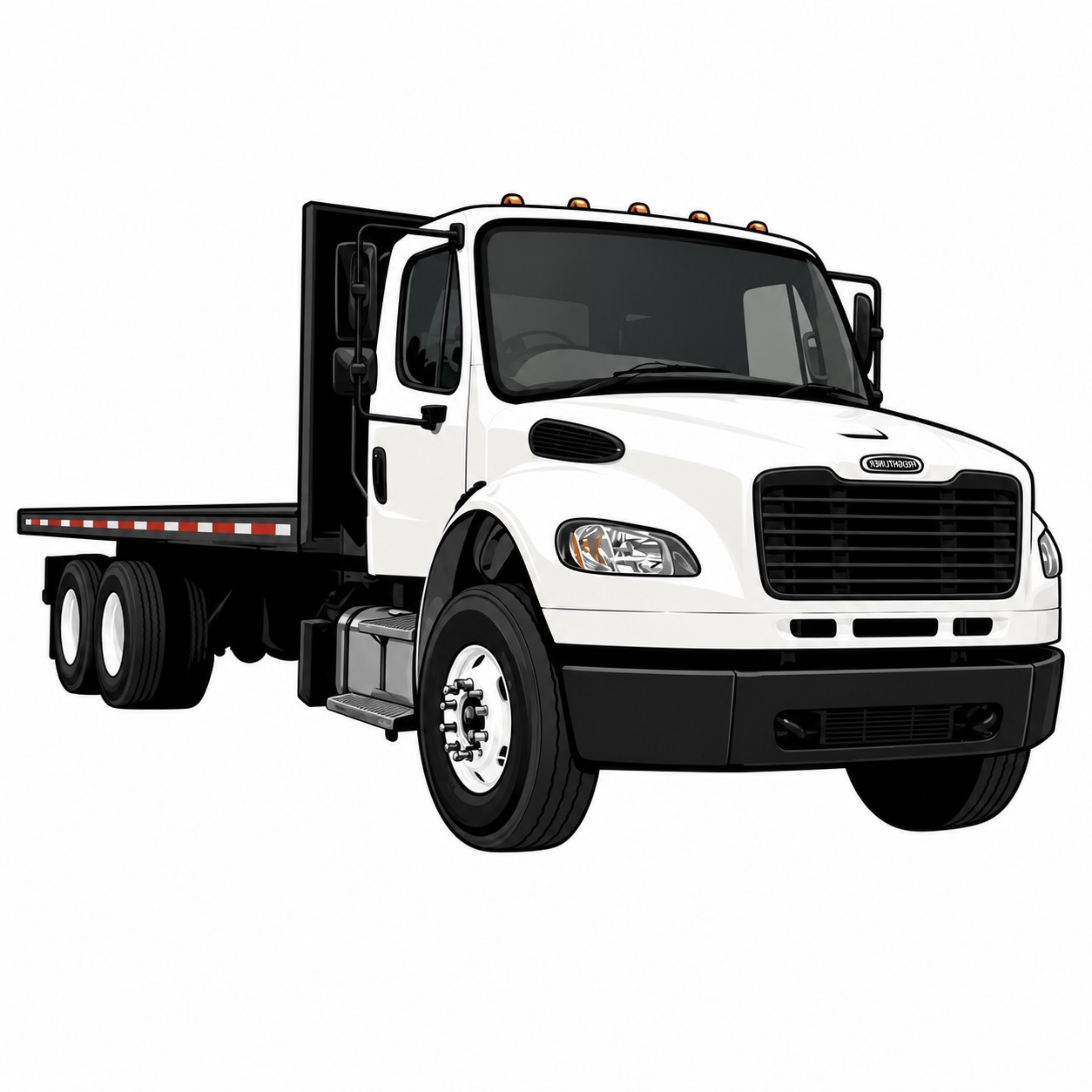
Flatbed Trucking in 2026: The Trends Reshaping Rates, Capacity, and Equipment Decisions
Flatbed trucking is having a different kind of year than the rest of the truckload market. While dry van and reefer rates have stayed relatively flat, flatbed has been one of the tightest, fastest-moving segments in freight — and that shift is changing how fleet managers and logistics operators plan their equipment strategy for the rest of 2026.
Here's what's driving the market right now, and what it means if you're managing a flatbed fleet or relying on one.
Flatbed Capacity Is Tightening — and Rates Are Following
Spot market flatbed rates have been climbing for months, hitting some of the strongest levels seen in several years. The driving forces are consistent across nearly every industry report: infrastructure spending, data-center construction, energy-sector projects, and a wave of domestic manufacturing activity are all generating freight that has to move on a flatbed — steel, heavy machinery, wind energy components, and building materials don't fit in a box trailer.
At the same time, driver availability has tightened and overall truckload capacity has contracted, so flatbed capacity is being absorbed faster than in a typical year. The result is a market where fleets with available flatbed equipment are seeing better rate leverage than they have in a while, and shippers are being encouraged to lock in capacity and carrier relationships ahead of demand spikes rather than booking last-minute.
Regulatory Shifts Are Pulling Non-Compliant Trucks Out of Service
One underappreciated factor tightening capacity further: regulatory enforcement around electronic logging devices has forced a number of carriers running non-compliant ELD models to pause operations. Every truck that exits the market this way adds pressure to an already tight supply — which matters for fleet managers deciding whether to expand their own flatbed capacity now or wait.
Seasonal and Regional Patterns Still Matter
Flatbed demand doesn't move uniformly across the country. Regions tied to construction, energy, and industrial activity — notably the Midwest, Southeast, and Texas — are seeing some of the strongest rate environments, while seasonal patterns (like spring construction ramp-up and weather-sensitive northern regions) continue to swing capacity in predictable but significant ways. Fleet managers who plan around these seasonal cycles, rather than reacting to them, are better positioned when rates spike.
Equipment Trends: Lighter, Smarter, and More Efficient
Beyond rates and capacity, the equipment itself is evolving:
- Lightweight trailer materials — advanced composites are shaving weight off trailers, which directly increases usable payload capacity without changing axle configuration.
- Smart tracking and telematics — GPS and IoT-based monitoring are becoming standard expectations rather than premium add-ons, giving fleets real-time visibility into cargo condition and location.
- Fuel efficiency and alternative power — the push toward more fuel-efficient engines, and slow but steady interest in electric and hydrogen-powered options, is starting to show up in fleet replacement conversations, even if adoption is still early-stage for heavy flatbed work.
What This Means for Fleet Managers and Logistics Operators
For fleet managers, the tightening capacity environment is a signal to evaluate whether existing flatbed and truck-mounted equipment is being fully utilized, and whether now is the time to add capacity before equipment costs and rates climb further. Carriers with well-maintained, versatile equipment (including flatbeds paired with truck-mounted forklifts for self-unloading flexibility) are in a stronger negotiating position in a market like this one.
For logistics operators, the message is similar but from the buyer's side: securing reliable carrier relationships and locking in capacity ahead of demand spikes matters more this year than in a looser market. Waiting for last-minute spot rates in a tightening flatbed market usually means paying a premium.
Bottom Line
2026 has turned into one of the stronger years for flatbed trucking in recent memory, driven by infrastructure spending, energy projects, and manufacturing reshoring — combined with tightening driver availability and regulatory-driven capacity reductions. Whether you're managing a fleet or relying on one, the operators who plan ahead of these cycles, rather than reacting to them, are the ones coming out ahead.
Want to make sure your fleet is equipped to move fast in a tightening market? Check our flatbed inventory to see what's available.